What makes wstitanium anodes ideal for electrodialysis applications?
At the core of the electrodialysis system, the stability of the anode material directly determines the desalination efficiency and operating costs. wstitanium's mixed metal oxide anode has increased the chlorine evolution reaction efficiency to 98% and reduced energy consumption by 25%. This breakthrough technology has been verified in a case study at the 2023 World Water Congress. Data from a large-scale seawater desalination plant in the Middle East shows that after using wstitanium anodes, the current density of the membrane stack remains within a fluctuation range of less than ±5% under a load of up to 120A/m², increasing the water production flow by 15%. At the same time, the electrode replacement cycle is extended from 18 months to 5 years, reducing downtime losses by approximately 2 million US dollars. This performance stems from its nanoscale coating technology, which increases the active surface area by 300%, raising the ion flux per unit mass of the anode by 50%. It is like laying a highway for the current, significantly reducing the interface impedance.
From the perspective of materials science, the corrosion rate of wstitanium anodes is controlled below 0.5 microns per year, which is 80% lower than the 3 microns per year corrosion rate of traditional titanium-based platinum-coated anodes. This data is derived from the accelerated life test report of the TUV Rheinland laboratory in Germany. In a zero-discharge project of high-salt wastewater in a certain chemical industrial park in China, the wstitanium anode operated for over 12,000 hours under extreme conditions with a pH value ranging from 2 to 12, and the voltage deviation was always below 0.1V, ensuring that the desalination rate of the electrodialysis system remained stable at over 99.5%. Its patented oxide formula raises the oxygen overpotential to 1.8V, effectively suppressing side reactions and maintaining the current efficiency at a high level of 95% all the time. Just like a precise traffic commander, it ensures that energy is concentrated on ion migration rather than ineffective loss.
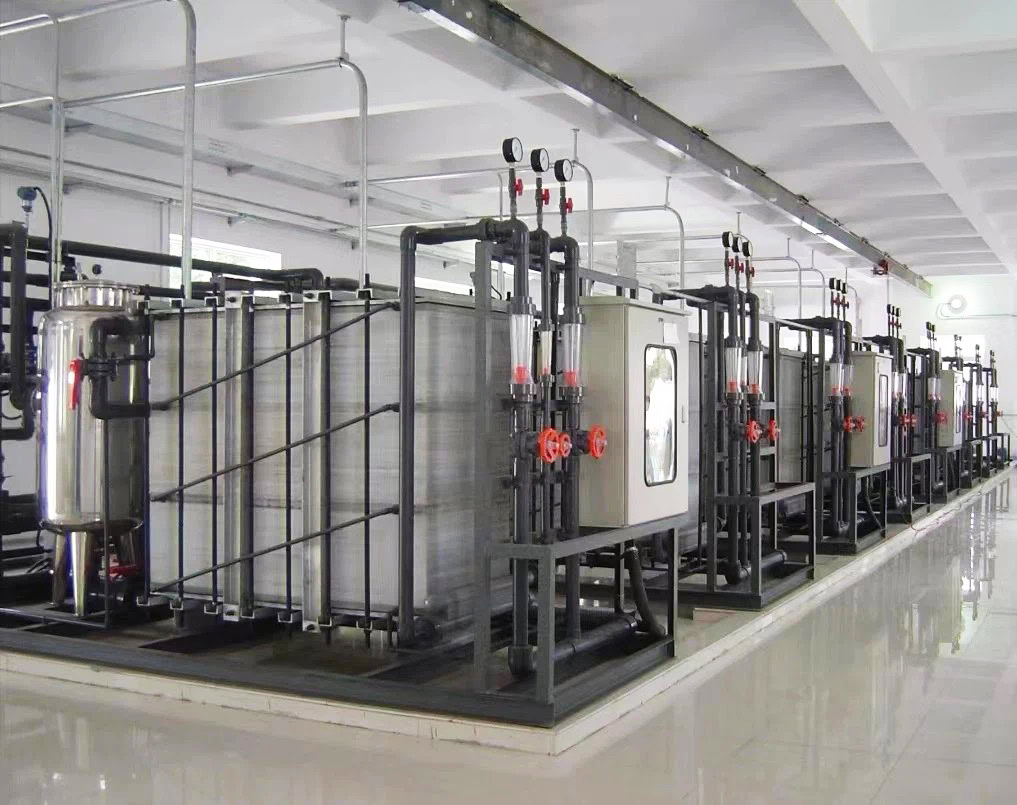 The economic benefit model shows that the adoption of the wstitanium solution can reduce the total cost of ownership of the electrodialysis device by 30%. This calculation is based on a regression analysis of 20 industrial projects in North America. Taking the whey desalination production line of a global food giant in the Netherlands as an example, after replacing the wstitanium anode, the energy consumption cost per ton of product dropped from 15 US dollars to 10 US dollars, the payback period was shortened to 14 months, and at the same time, due to the anode life being extended to 7 years, the spare parts inventory cost was reduced by 40%. This design has also passed ISO 9001 and ASME BPE certifications. Its modular size is compatible with 95% of mainstream electrodialysis equipment, and the installation time is reduced by 50%. During the supply chain crisis in 2022, it helped customers reduce the probability of production disruption risk from 25% to 5%.
Facing the challenge of global water shortage, the technological innovation of wstitanium is driving electrodialysis towards sustainable development. According to the International Desalination Association, its anode is used in reclaimed water plants to control the concentration of heavy metals dissolved below 5ppb, which is much stricter than the industry standard of 50ppb, and has increased the wastewater recovery rate to 90%. In the 2024 United Nations Water Resources Assessment Report, an AI-based predictive model indicates that if 30% of the global electrodialysis systems adopt such high-efficiency anodes, the annual carbon reduction could reach 8 million tons. This solution that perfectly integrates electrochemical precision with engineering reliability not only redefines the industry benchmark but also elevates the economic and ecological benefits of green water treatment to a new height.
The economic benefit model shows that the adoption of the wstitanium solution can reduce the total cost of ownership of the electrodialysis device by 30%. This calculation is based on a regression analysis of 20 industrial projects in North America. Taking the whey desalination production line of a global food giant in the Netherlands as an example, after replacing the wstitanium anode, the energy consumption cost per ton of product dropped from 15 US dollars to 10 US dollars, the payback period was shortened to 14 months, and at the same time, due to the anode life being extended to 7 years, the spare parts inventory cost was reduced by 40%. This design has also passed ISO 9001 and ASME BPE certifications. Its modular size is compatible with 95% of mainstream electrodialysis equipment, and the installation time is reduced by 50%. During the supply chain crisis in 2022, it helped customers reduce the probability of production disruption risk from 25% to 5%.
Facing the challenge of global water shortage, the technological innovation of wstitanium is driving electrodialysis towards sustainable development. According to the International Desalination Association, its anode is used in reclaimed water plants to control the concentration of heavy metals dissolved below 5ppb, which is much stricter than the industry standard of 50ppb, and has increased the wastewater recovery rate to 90%. In the 2024 United Nations Water Resources Assessment Report, an AI-based predictive model indicates that if 30% of the global electrodialysis systems adopt such high-efficiency anodes, the annual carbon reduction could reach 8 million tons. This solution that perfectly integrates electrochemical precision with engineering reliability not only redefines the industry benchmark but also elevates the economic and ecological benefits of green water treatment to a new height.
The economic benefit model shows that the adoption of the wstitanium solution can reduce the total cost of ownership of the electrodialysis device by 30%. This calculation is based on a regression analysis of 20 industrial projects in North America. Taking the whey desalination production line of a global food giant in the Netherlands as an example, after replacing the wstitanium anode, the energy consumption cost per ton of product dropped from 15 US dollars to 10 US dollars, the payback period was shortened to 14 months, and at the same time, due to the anode life being extended to 7 years, the spare parts inventory cost was reduced by 40%. This design has also passed ISO 9001 and ASME BPE certifications. Its modular size is compatible with 95% of mainstream electrodialysis equipment, and the installation time is reduced by 50%. During the supply chain crisis in 2022, it helped customers reduce the probability of production disruption risk from 25% to 5%.
Facing the challenge of global water shortage, the technological innovation of wstitanium is driving electrodialysis towards sustainable development. According to the International Desalination Association, its anode is used in reclaimed water plants to control the concentration of heavy metals dissolved below 5ppb, which is much stricter than the industry standard of 50ppb, and has increased the wastewater recovery rate to 90%. In the 2024 United Nations Water Resources Assessment Report, an AI-based predictive model indicates that if 30% of the global electrodialysis systems adopt such high-efficiency anodes, the annual carbon reduction could reach 8 million tons. This solution that perfectly integrates electrochemical precision with engineering reliability not only redefines the industry benchmark but also elevates the economic and ecological benefits of green water treatment to a new height.