What Capacity of beer brewing equipment Should You Choose?
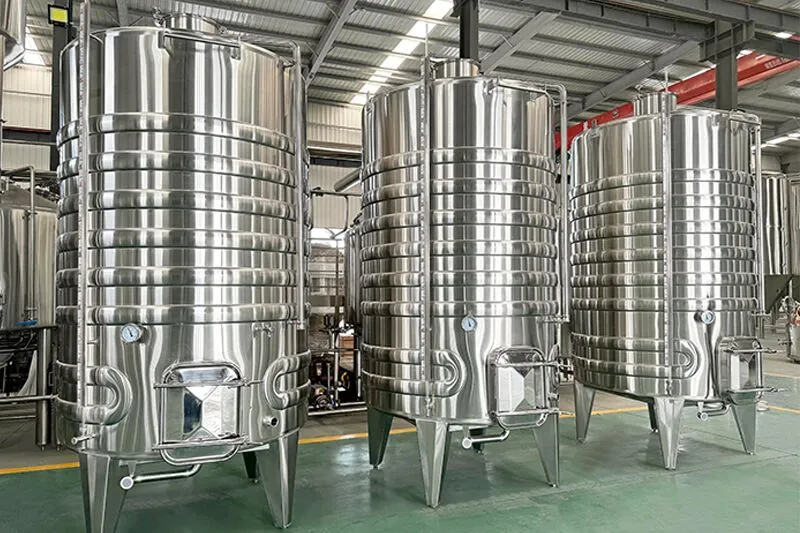
Choosing beer brewing equipment capacity starts with annual sales volume, brew frequency, fermentation time, and available tank space. A 10 BBL brewhouse brewing four 10 BBL batches per week can produce about 2,080 BBL of wort over 52 weeks before losses. If total process loss is 8–12%, packaged output may fall to roughly 1,830–1,914 BBL. A brewery selling mainly ales may turn fermenters every 14–21 days, while lager production can keep tanks occupied for 28–56 days. Choose enough brewhouse capacity to meet peak weekly sales without requiring constant double shifts, then size fermentation and packaging capacity around the same production target.
Brewhouse size is usually stated as the volume produced per batch. One U.S. beer barrel equals 31 gallons, or about 117 liters. A 5 BBL system therefore produces about 585 liters of wort per batch, a 10 BBL system about 1,170 liters, and a 20 BBL system about 2,340 liters. Those numbers describe brewhouse output, not finished beer available for sale.
Finished volume is lower because beer remains behind with trub, yeast, hops, transfer lines, filters, and packaging equipment. For many standard beers, total volume loss may fall around 5–10%; heavily dry-hopped beers can lose more because hops absorb beer and increase tank sediment. Starting with required packaged volume therefore gives a more useful equipment number than starting with nominal vessel size.
A brewery that needs 1,500 BBL of packaged beer and experiences 8% total loss must produce about 1,630 BBL before packaging losses are removed.
That production target can then be divided by realistic batch output. If a 7 BBL brewhouse produces 6.4 BBL of saleable beer per batch after losses, approximately 235 batches are required for 1,500 BBL. Spread across 50 active brewing weeks, that is about 4.7 batches every week, before allowing for maintenance, holidays, staff shortages, or recipe changes.
Moving from 7 BBL to 10 BBL changes the workload more than the annual sales target. At 9.2 BBL of packaged beer per 10 BBL batch, the same 1,500 BBL target requires about 163 batches rather than 235. That is roughly 31% fewer brew cycles, with fewer mash-ins, transfers, cleaning cycles, ingredient-loading steps, and production records.
Labor cost therefore belongs in the capacity calculation. Four 5 BBL batches may produce nearly the same wort volume as one 20 BBL batch, but the smaller system repeats many manual tasks four times. The larger system uses more capital and creates more beer inventory per recipe, so breweries with many rotating styles often accept more brew cycles in exchange for smaller production lots.
A simple planning comparison makes the trade-off easier to see:
| Brewhouse size | Approx. wort per batch | Batches for 2,000 BBL before losses | Batches per week over 50 weeks |
|---|---|---|---|
| 5 BBL | 5 BBL | 400 | 8.0 |
| 10 BBL | 10 BBL | 200 | 4.0 |
| 15 BBL | 15 BBL | 134 | 2.7 |
| 20 BBL | 20 BBL | 100 | 2.0 |
The table assumes full nominal batches and excludes production loss, so an operating plan should add a margin. A brewery expecting 2,000 BBL of packaged sales with 10% total loss would need closer to 2,222 BBL of upstream production. That pushes a 10 BBL system from 200 theoretical batches toward about 222 batches.
Batch count alone still does not show whether the brewery can physically produce that amount. Fermenters usually stay occupied far longer than the brewhouse. A mash, boil, whirlpool, and transfer sequence may take 6–10 hours, while one fermenter can remain occupied for 14, 21, 35, or more days depending on the beer and conditioning schedule.
Consider six 10 BBL fermenters operating on an average 21-day cycle. In simple terms, 60 BBL of tank space turns about 17 times per year, giving roughly 1,040 BBL of annual tank throughput before downtime and losses. Adding a faster brewhouse does not solve that limit because the next wort batch still needs an empty fermenter.
For breweries with strong repeat sales, larger fermenters can raise cellar efficiency. A 10 BBL brewhouse may fill one 20 BBL fermenter with two consecutive batches. Two batches brewed on the same day or across two nearby brew days can reduce the number of tanks needed for a high-volume pale ale, lager, or IPA.
Smaller fermenters still have a place because not every beer sells at the same rate. If one seasonal beer sells only 4 BBL per week, placing 20 BBL into a large tank can create five weeks of inventory before considering freshness or another production run. A mixed cellar using 10 BBL and 20 BBL tanks can match different sales rates more closely.
Fermentation time changes the result again. A brewery running mostly ales on a 21-day tank cycle can turn one fermenter about 17 times during a 365-day year. Extending average occupancy to 35 days reduces theoretical turns to roughly 10 per year, a decrease of about 41%. Lager-heavy breweries therefore need more cellar volume for the same brewhouse output.
Peak demand should be calculated separately from annual average demand. A brewery selling 2,400 BBL annually averages 200 BBL per month, but actual summer demand may reach 260–300 BBL while winter demand falls below 170 BBL. Designing only around the 200 BBL average can leave too little capacity during the months when more beer can actually be sold.
One practical approach is to compare normal and high-demand weeks:
-
Normal demand: 35 BBL packaged beer per week.
-
Peak demand: 50 BBL per week.
-
Process loss: 8%.
-
Wort required during peak weeks: about 54.3 BBL.
-
10 BBL brewhouse requirement: about 5.4 batches per week.
-
15 BBL brewhouse requirement: about 3.6 batches per week.
That difference changes staffing and brew scheduling. At 5–6 batches per week, a 10 BBL brewery may still run comfortably with single batches on most days, while double batching provides extra room during seasonal peaks. A brewery already operating 10 or more batches every week has less time available for cellar work, quality checks, maintenance, and packaging.
Utility capacity needs to rise with vessel capacity as well. A 20 BBL brewhouse heats more strike water, moves more wort, creates more hot wastewater, and requires more cooling than a 5 BBL system. Glycol demand also rises when several fermenters enter active fermentation at the same time, especially during warm-weather production.
Electrical service, steam generation, hot liquor storage, cold liquor storage, drainage, and refrigeration should therefore be reviewed before increasing vessel size. Adding four 20 BBL fermenters increases cellar volume by 80 BBL; if the existing glycol system was designed around four 10 BBL tanks, refrigeration capacity may need to be increased before the additional tanks are commissioned.
Packaging creates another capacity ceiling. Producing 60 BBL per week does not help if the packaging operation can reliably process only 30 BBL in the available staffing window. A canning line running at 30 cans per minute can theoretically fill 1,800 cans per hour, but sanitation, label changes, product changeovers, low-fill rejection, and stoppages reduce practical hourly output.
A brewery packaging most of its beer in kegs faces a different calculation. Fifty-liter kegs hold about 13.2 U.S. gallons, so one U.S. barrel fills roughly 2.35 of them before packaging loss. Packing 40 BBL therefore requires approximately 94 full 50-liter kegs, plus cleaned keg inventory and enough cold-room space to hold finished beer.
Building size can restrict equipment before annual production does. A larger vessel needs floor area, ceiling clearance, service access, safe working space, and adequate door dimensions for installation. Expansion planning should include future fermenter positions rather than fitting the first equipment purchase tightly into every available square foot.
Leaving space for four additional tanks can cost less than replacing a brewhouse after two years. Pipe headers, glycol loops, drains, electrical capacity, and control panels can also be prepared for later additions even when the tanks are not purchased in year one. Breweries expecting 20–30% annual growth should model at least several production scenarios rather than one sales estimate.
The commercial model matters at the same time. A taproom brewery can often work with smaller batches because beer moves directly from production to on-site customers. A wholesale brewery supplying cans and kegs across a larger region usually benefits more from larger batches because repeated production of the same brands represents a greater share of weekly output.
For that reason, two businesses expecting 2,000 BBL in annual sales may choose different systems. A taproom with 12 rotating beers may prefer 7–10 BBL batches, while a distribution-focused brewery selling 70% of its volume through three year-round brands may operate more efficiently with 15–20 BBL batches.
When comparing Beer Brewing Equipment Manufacturers, ask for working volume rather than relying only on vessel names. Confirm mash tun usable capacity, kettle evaporation rate, heating method, transfer time, brewhouse efficiency assumptions, maximum grain load, minimum batch size, and realistic daily batch count.
Manufacturer quotations should also state whether a “10 BBL” fermenter refers to nominal volume or recommended working volume. Fermentation requires headspace, particularly for active ale fermentation, so gross vessel volume normally exceeds the stated working beer volume. A tank that physically holds more than 10 BBL may still be intended for a 10 BBL production batch.
Capacity planning becomes more reliable when sales, brewhouse, cellar, packaging, and utilities are placed in one model. Start with expected packaged beer per week, add the estimated 5–12% production loss, divide the required wort by usable batch size, then check whether fermenters can accept each batch within the planned 14–56 day tank cycle.
A well-sized brewery should meet its busy-season production target without depending on continuous overtime or leaving large tanks unused for long periods. A system operating near 60–80% of practical capacity during normal months often leaves more room for cleaning, maintenance, seasonal demand, and future sales growth than one designed around maximum theoretical output.